
Panic Disorder Treatment in Irvine, California: Symptoms, Diagnosis, and Recovery
Learn how panic attacks develop, how panic disorder is diagnosed, and which evidence-based treatments can help.

This article has been medically reviewed for clinical accuracy and reflects current evidence-based approaches to the evaluation and treatment of panic disorder.
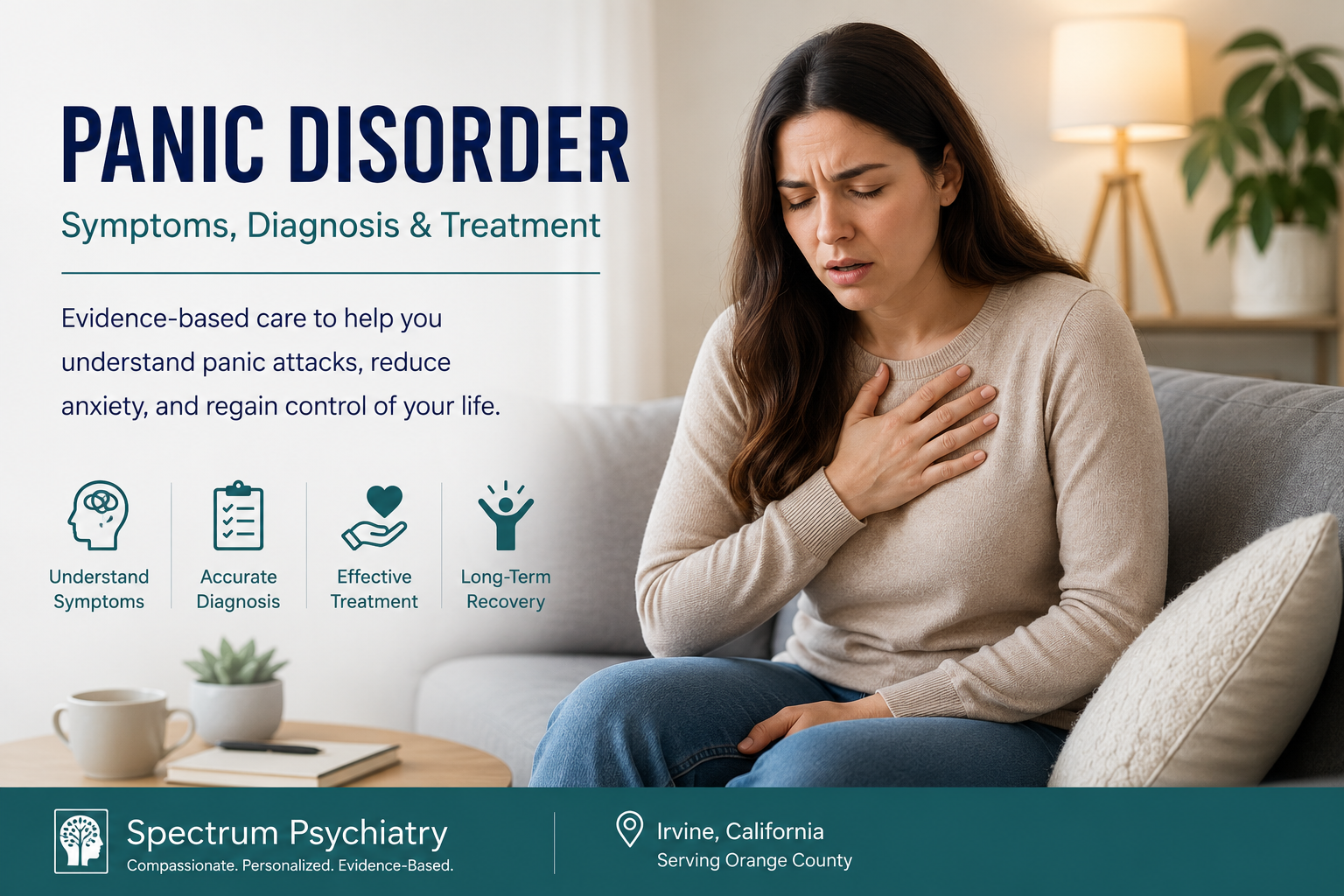
A panic attack can feel sudden, overwhelming, and physically frightening. A person may experience a racing heart, chest tightness, dizziness, shortness of breath, trembling, nausea, or a strong fear that something terrible is about to happen. Because the symptoms can feel so intense, many people worry that they are having a heart attack, losing control, or dying.
Panic disorder is treatable. With an accurate diagnosis, personalized psychiatric care, psychotherapy, and medication when appropriate, many people can reduce the frequency and intensity of panic attacks and regain confidence in daily life.
What Is a Panic Attack?
A panic attack is a sudden episode of intense fear or discomfort that can develop even when there is no immediate danger. Symptoms often rise quickly and may reach their strongest point within several minutes.
A single panic attack does not necessarily mean that someone has panic disorder. Panic attacks can also occur with other anxiety conditions, trauma-related disorders, depression, substance use, certain medical conditions, or periods of severe stress.
What Is Panic Disorder?
Panic disorder is an anxiety disorder involving repeated, unexpected panic attacks. People may also develop persistent worry about having another attack or begin changing their behavior to avoid situations they fear could trigger symptoms.
This fear of future attacks can become as disruptive as the panic attacks themselves. It may affect driving, work, travel, exercise, shopping, social activities, or the ability to spend time away from home.
Common Symptoms of a Panic Attack
Panic attacks can involve both physical and emotional symptoms. Common experiences include:
- ✓ A racing, pounding, or irregular-feeling heartbeat
- ✓ Chest pain, pressure, or tightness
- ✓ Shortness of breath or a choking sensation
- ✓ Sweating, chills, or hot flashes
- ✓ Trembling or shaking
- ✓ Dizziness, weakness, or feeling faint
- ✓ Nausea or abdominal discomfort
- ✓ Numbness or tingling sensations
- ✓ Feeling detached from oneself or the surroundings
- ✓ Fear of losing control, going crazy, or dying
Why Panic Attacks Feel So Dangerous
During a panic attack, the body's alarm system becomes highly activated. Stress hormones can increase heart rate, breathing, muscle tension, and alertness. These reactions are designed to protect a person from danger, but during a panic attack they occur without a proportionate external threat.
Physical sensations may then be interpreted as evidence that something is seriously wrong. This interpretation can increase fear, which intensifies the sensations and creates a cycle of escalating panic.
Panic Disorder and Agoraphobia
Some people with panic disorder develop agoraphobia. This involves fear or avoidance of places where escape may feel difficult or help may not seem readily available if panic symptoms occur.
A person may begin avoiding crowded stores, public transportation, freeways, airplanes, elevators, theaters, or being far from home. Without treatment, avoidance can gradually become more restrictive.
What Causes Panic Disorder?
Panic disorder does not have one single cause. A combination of biological vulnerability, genetics, stress, learned fear responses, and sensitivity to physical sensations may contribute.
Major life changes, chronic stress, sleep disruption, trauma, illness, caffeine, stimulants, and substance use may also trigger or worsen panic symptoms in some individuals.
Panic Attacks or a Medical Emergency?
Panic attacks can resemble heart, breathing, thyroid, neurologic, or other medical problems. New, severe, unusual, or persistent physical symptoms should not automatically be assumed to be anxiety.
Seek urgent medical care for symptoms such as severe or new chest pain, fainting, significant breathing difficulty, weakness on one side of the body, confusion, or any situation that may represent a medical emergency.
How Is Panic Disorder Diagnosed?
Diagnosis begins with a comprehensive evaluation. A psychiatrist may review the pattern of panic attacks, physical symptoms, triggers, avoidance behaviors, medical history, medications, caffeine use, alcohol or substance use, sleep, and other mental health symptoms.
The evaluation may include:
- ✓ A detailed history of panic symptoms and their frequency
- ✓ Review of anxiety, mood, trauma, and sleep symptoms
- ✓ Assessment of avoidance and functional impairment
- ✓ Review of current medications and substance use
- ✓ Consideration of medical conditions that may mimic panic
- ✓ Laboratory or medical testing when clinically appropriate
Panic Disorder Treatment Options
Treatment is personalized according to symptom severity, health history, treatment preferences, coexisting conditions, and the degree to which panic affects everyday life.
Cognitive Behavioral Therapy
Cognitive behavioral therapy, often called CBT, is a widely used treatment for panic disorder. It helps people understand the cycle of panic, reconsider catastrophic interpretations of physical sensations, and respond differently when symptoms arise.
Exposure-Based Treatment
Exposure-based strategies may help a person gradually face feared sensations or situations in a structured and supportive way. Over time, this can reduce avoidance and help the nervous system learn that uncomfortable sensations are not necessarily dangerous.
Medication Management
Antidepressant medications, including certain SSRIs and SNRIs, may be considered for panic disorder. These medications usually require consistent use and may take time to provide their full benefit.
Other medications may sometimes be considered depending on the clinical situation. Medication decisions should account for potential benefits, side effects, medical history, interactions, and the risk of dependence or withdrawal with certain medicines.
Lifestyle and Supportive Strategies
Helpful supportive measures may include:
- ✓ Maintaining a consistent sleep schedule
- ✓ Reducing excessive caffeine and stimulant use
- ✓ Limiting alcohol and avoiding recreational drugs
- ✓ Practicing slow, comfortable breathing
- ✓ Engaging in regular physical activity
- ✓ Following a structured treatment plan
- ✓ Gradually reducing avoidance with professional guidance
What to Do During a Panic Attack
When panic symptoms begin, the following approaches may help:
- ✓ Remind yourself that panic symptoms are temporary
- ✓ Breathe slowly without forcing unusually deep breaths
- ✓ Place both feet on the floor and notice your surroundings
- ✓ Name objects, sounds, or sensations around you
- ✓ Avoid repeatedly checking your pulse or searching symptoms
- ✓ Follow the coping plan developed with your clinician
When Should You Seek Professional Help?
Consider professional evaluation when panic attacks are repeated, unpredictable, or followed by persistent fear of another attack. Help is also important when symptoms interfere with driving, work, relationships, travel, sleep, exercise, or leaving home.
Panic Disorder Care at Spectrum Psychiatry
Spectrum Psychiatry provides personalized psychiatric evaluation and medication management for adults experiencing panic attacks, panic disorder, anxiety, and related concerns in Irvine and Orange County.
Care focuses on understanding the full clinical picture, identifying possible contributing factors, reviewing treatment options, and developing an individualized plan that supports long-term recovery.
Panic Disorder Treatment in Irvine and Orange County
Spectrum Psychiatry offers compassionate, evidence-based care for panic attacks, panic disorder, anxiety, and related mental health concerns.
- ✓ Comprehensive psychiatric evaluations
- ✓ Panic disorder assessment
- ✓ Medication management
- ✓ Telepsychiatry appointments
- ✓ Personalized treatment planning
Schedule an Appointment
If panic attacks or fear of future attacks are interfering with daily life, professional support is available. Spectrum Psychiatry serves patients throughout Irvine, Newport Beach, Costa Mesa, Tustin, Lake Forest, Mission Viejo, and surrounding Orange County communities.